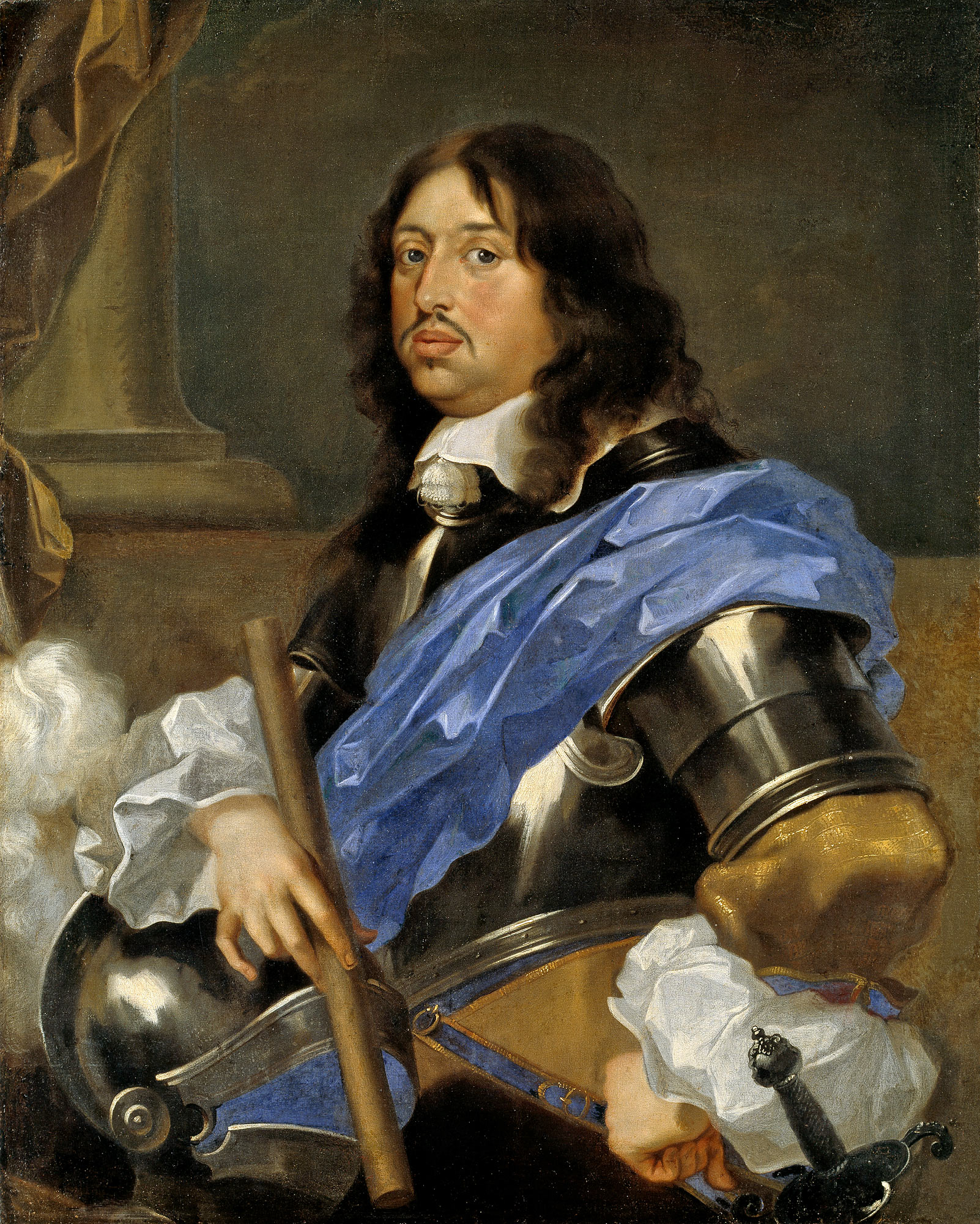
Dear Readers,
As you may or may not have heard, I am undertaking to rank the greatest army commanders of the Kabinettskriege age. You can find a full list of the potential candidates here. These are the following categories upon which these generals are being judged:
A) Battle win-loss record, reckoned against total number of battles fought as commander.
B) Achievement and Sustainment of strategic/political aims
C) Charisma/inspiration of soldiers under their command
D) Scale of operations under their personal command
E) Display of originality/flexibility in thinking
This post will list the highest scoring members from the pool in the previous post, ranked from lowest (5th) to highest (1st). Without further adieu, here are the winners:

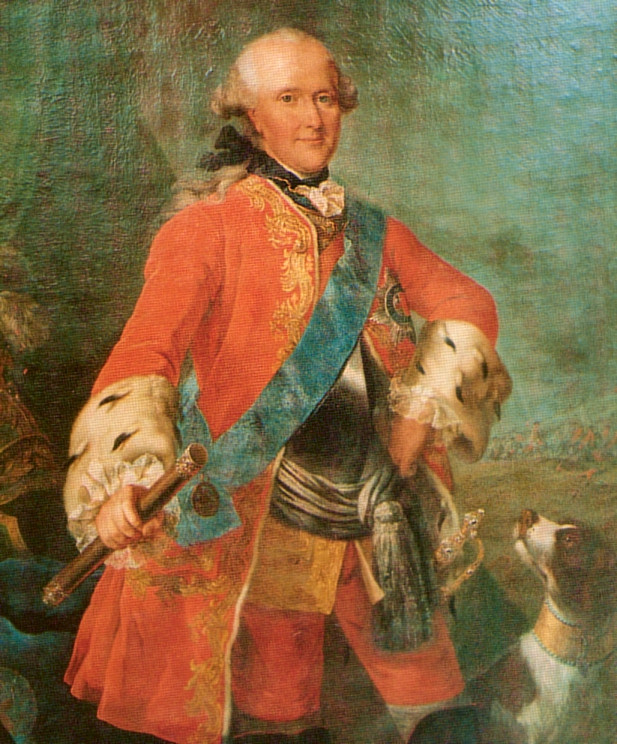
5. Maurice de Saxe, Marshal of France
A) 5/5 B) 3/5 C) 3/5 D) 4/5 E) 4/5 Total: 19/25
The greatest French military mind between Turenne, Villars, and Napoleon, Maurice de Saxe showed incredible military wisdom in his repeated defeats of British and Allied forces in the War of Austrian Succession. The victor of Fontenoy, Lauffeldt, and Roucoux, A lifelong soldier, he served under Prinz Eugene of Savoy, as well as Peter I of Russia in the late stages of the Great Northern War. Maurice came to the attention of Europe when he commanded the successful surprise attack against the city of Prague in September of 1741.In addition to the successful field battles named above, de Saxe assisted in the capture of Brussels, Bergen-op-Zoom, and Maastricht. Among eighteenth century generals, de Saxe stands out for his ability to capitalize on his successes in the field with consequent gains in terms of territory and fortresses. Dying early, at the age of 54, one wonders that the outcome of the Seven Years' War in Europe might have been different if he had lived another ten years. Despite the passage of two hundred and fifty years, his memoirs remain a fascinating piece of military theory. De Saxe will forever be one of the more romantic figures of eighteenth-century warfare, his legacy untainted by the mistakes of later years.[2]


4. Prince Eugene of Savoy
A) 4/5 B) 4/5 C) 3/5 D) 4.5/5 E) 4/5 Total: 19.5/25
Prinz Eugen von Savoyen might be one of the first individuals in German Central Europe to achieve celebrity status in his own lifetime. He has an incredible song, and sat for an astounding number of portraits. Invariably, in these portraits, he is always pointing at something great that he did. On a more serious note, Prince Eugene was one of the most able soldiers of his age, successfully winning battles against the French, Ottomans, and Bavarians. He is closely associated with the Duke of Marlborough (below) and careful reader will note that Prince Eugene and Marlborough have tied in their score. Though Eugene was not always as successful as Marlborough, he had a far longer military career, facing more diverse opponents. His soldiers' laughed at his homosexuality, as camp songs from the era show, but fought well for him. He achieved notable victories at Hoechstaedt (Blenheim) in 1704 Turin in 1706, and Belgrade in 1717, although there were many others. Like many on this list, he suffers from the lack of a good modern biography in English, but those who read German can trace his campaigns though a massive multi-volume record of his correspondence which was published in late nineteenth-century.[2]
3. John Churchill, Duke of Marlborough
A) 5/5 B) 3/5 C) 3.5/5 D) 4/5 E) 4/5 Total 19.5/25
Perhaps the greatest praise of Marlborough comes from another of the British "great captains," the Duke of Wellington. In 1836, he commented, "I always used to say that the presence of Napoleon at a battle was worth a reinforcement of 40,000 men. But I can conceive nothing greater than Marlborough at the head of an English army."[3] Marlborough's achievements are manifold. Coming to prominence in the reign of James, he was able to adroitly transfer his loyalties to William and Mary during the Glorious Revolution of 1688. The greatest test of his career was the grueling War of Spanish Succession, where Marlborough was the commander-in-chief of the effort against Louis XIV's France. While Marlborough's great battlefield victories are familiar to many: Blenheim, Ramillies, Oudenarde, Malplaquet, the war was less successful in the strategic realm, Philip, Duke of Anjou, would still become King of Spain. Although the allies secured the assurance that Spain and France would not be unified into one Bourbon kingdom, the allied kingdoms of France and Spain would go on to injure England in the course of the eighteenth century, during the American War of Independence. Marlborough's repeated victories and confident planning won him the respect of his men, this is clear the letters and journals of soldiers who served with him, such as John Marshall Deane. Marlborough advanced the art of war tactically, and his predilection for firepower would do much to influence later armies of the Kabinettskriege age.[4]

2. Alexander Suvorov
A) 5/5 B) 3/5 C) 4/5 D) 4/5 E) 5/5 Total: 21/25
Alexander Suvorov was, without question, the greatest Russian military mind to grace the eighteenth century. A sickly child, Suvorov spent his early years reading military history intensively, and at age 18, enlisted in the Semyonovsky Guard Regiment. Cutting his teeth in the campaigns against Frederick of Prussia in the Seven Years' War, Suvorov obtained a colonelcy at the age of 32, at the end of the Seven Years' War. His first independent commands saw victories over Polish rebels and the Ottoman Empire. Despite being outnumbered against the Ottomans, Suvorov led his men to victory time and again. Suvorov became famous for his initiative, which occasionally earned him censure. He led campaigns in Eastern Europe until his exile by Paul I of Russia in 1796. Suvorov, who was admired by Catherine, disagreed with Paul about military doctrine, particularly an infectious strain of Prusso-mania which had damaged the Russian fighitng ability. After three years of retirement, Suvorov returned to lead a lightening campaign in Italy in 1799. Though he never fought against Napoleon, Suvorov's victories in this campaign show that the armies of the Ancien Regime, when led by an able commander, were not impotent against the forces of Revolutionary France. Suvorov also gives modern readers a number of exceptionally pithy quotes, such as:
"What is hard in training will be easy in battle."
"Win with ability, not with numbers."
"Perish yourself, but rescue your comrade."
A great leader of men, Suvorov deserves to be considered as one of the foremost military minds in world history.[5]

Alexander Suvorov was, without question, the greatest Russian military mind to grace the eighteenth century. A sickly child, Suvorov spent his early years reading military history intensively, and at age 18, enlisted in the Semyonovsky Guard Regiment. Cutting his teeth in the campaigns against Frederick of Prussia in the Seven Years' War, Suvorov obtained a colonelcy at the age of 32, at the end of the Seven Years' War. His first independent commands saw victories over Polish rebels and the Ottoman Empire. Despite being outnumbered against the Ottomans, Suvorov led his men to victory time and again. Suvorov became famous for his initiative, which occasionally earned him censure. He led campaigns in Eastern Europe until his exile by Paul I of Russia in 1796. Suvorov, who was admired by Catherine, disagreed with Paul about military doctrine, particularly an infectious strain of Prusso-mania which had damaged the Russian fighitng ability. After three years of retirement, Suvorov returned to lead a lightening campaign in Italy in 1799. Though he never fought against Napoleon, Suvorov's victories in this campaign show that the armies of the Ancien Regime, when led by an able commander, were not impotent against the forces of Revolutionary France. Suvorov also gives modern readers a number of exceptionally pithy quotes, such as:
"What is hard in training will be easy in battle."
"Win with ability, not with numbers."
"Perish yourself, but rescue your comrade."
A great leader of men, Suvorov deserves to be considered as one of the foremost military minds in world history.[5]
1. Frederick II Hohenzollern, "the Great"
A) 3/5 B) 4/5 C) 5/5 D) 5/5 E) 4.5/5 Total: 21.5/25
Frederick's expression above no doubt mimic's the readers surprise to find him at the top of the list. In all seriousness, it has recently become very fashionable academically, and even in popular history, to look down on Frederick the Great's achievements. I cannot say that I agree with this trend, and while Frederick certainly should not be regarded as a starry-eyed Uebermensch, who single-handedly won the wars in which he took part, he is, in my opinion, the greatest captain of the Kabinettskriege age. Now for the justification: how did I arrive at the numbers above. You will note, Frederick scores rather low in the win/loss category. He won around half the battles which he commanded in the Seven Years' War, and all of the battles in the War of Austrian Succession. With this in mind, and with his impressive total number of battles as a commander, he receives an above average, but not exceptional A) criteria score. Frederick generally achieved his goals for the Prussian state: he seized and held Silesia for the duration of his reign, and also added West Prussia to Hohenzollern domains. Thus, he scores quite well in the B) criteria. The letters of Frederick's common soldiers, althought not some of his personal aides and officers during the later Seven Years' War, show devotion which exceeds most eighteenth-century commanders. This grants Frederick a perfect score in the C) category. In terms of forces under his command, Frederick's role as Roi-Connétable allowed him to wage war on multiple fronts, leaving defensive armies in secondary theaters, and bringing his royal army to bare on whatever enemy looked the most pressing. Finally, Frederick's system of flank attacks proved highly successful in the War of Austrian Succession and early Seven Years' War. Though Frederick's enemies adapted to meet this challenge, the king recognized this adaptation, and showed that he was as adept at defensive warfare as his foes. Though not as able on the battlefield as some of his contemporaries, Frederick's system of war allowed Prussia to survive and grow in the aftermath of the Seven Years' War. This achievement places him, in my opinion, at the pinnacle of Kabinettskriege era commanders.[6]
Do you agree with these rankings?
Thanks for Reading,
Alex Burns
--------------------------------------------------------------------------------------------------------------------------
[1] To my knowledge, and I am no expert, there is no more recent biography of de Saxe in English than Jon Manchip White, Marshal of France: The Life and Times of Maurice, Comte de Saxe.
[2] The most recent biography in English is Nicholas Henderson, Prince Eugene of Savoy.
[3]Stanhope, Miscellanies, 81.
[4] See David Chandler's Marlborough as Military Commander, and John Lynn's The Wars of Louis XIV.
[5] See: Phillip Longworth's The Art of Victory, and Christopher Duffy's, Eagles Over the Alps.
[6] The two "must read" biographies of Frederick in English are: Duffy, Frederick the Great: A Military Life, and Tim Blanning, Frederick the Great: King of Prussia.
Frederick's expression above no doubt mimic's the readers surprise to find him at the top of the list. In all seriousness, it has recently become very fashionable academically, and even in popular history, to look down on Frederick the Great's achievements. I cannot say that I agree with this trend, and while Frederick certainly should not be regarded as a starry-eyed Uebermensch, who single-handedly won the wars in which he took part, he is, in my opinion, the greatest captain of the Kabinettskriege age. Now for the justification: how did I arrive at the numbers above. You will note, Frederick scores rather low in the win/loss category. He won around half the battles which he commanded in the Seven Years' War, and all of the battles in the War of Austrian Succession. With this in mind, and with his impressive total number of battles as a commander, he receives an above average, but not exceptional A) criteria score. Frederick generally achieved his goals for the Prussian state: he seized and held Silesia for the duration of his reign, and also added West Prussia to Hohenzollern domains. Thus, he scores quite well in the B) criteria. The letters of Frederick's common soldiers, althought not some of his personal aides and officers during the later Seven Years' War, show devotion which exceeds most eighteenth-century commanders. This grants Frederick a perfect score in the C) category. In terms of forces under his command, Frederick's role as Roi-Connétable allowed him to wage war on multiple fronts, leaving defensive armies in secondary theaters, and bringing his royal army to bare on whatever enemy looked the most pressing. Finally, Frederick's system of flank attacks proved highly successful in the War of Austrian Succession and early Seven Years' War. Though Frederick's enemies adapted to meet this challenge, the king recognized this adaptation, and showed that he was as adept at defensive warfare as his foes. Though not as able on the battlefield as some of his contemporaries, Frederick's system of war allowed Prussia to survive and grow in the aftermath of the Seven Years' War. This achievement places him, in my opinion, at the pinnacle of Kabinettskriege era commanders.[6]
Do you agree with these rankings?
Thanks for Reading,
Alex Burns
--------------------------------------------------------------------------------------------------------------------------
[1] To my knowledge, and I am no expert, there is no more recent biography of de Saxe in English than Jon Manchip White, Marshal of France: The Life and Times of Maurice, Comte de Saxe.
[2] The most recent biography in English is Nicholas Henderson, Prince Eugene of Savoy.
[3]Stanhope, Miscellanies, 81.
[4] See David Chandler's Marlborough as Military Commander, and John Lynn's The Wars of Louis XIV.
[5] See: Phillip Longworth's The Art of Victory, and Christopher Duffy's, Eagles Over the Alps.
[6] The two "must read" biographies of Frederick in English are: Duffy, Frederick the Great: A Military Life, and Tim Blanning, Frederick the Great: King of Prussia.



.jpg)