As you may or may not have heard, I am undertaking to rank the greatest army commanders of the Kabinettskriege age. You can find a full list of the potential candidates here. These are the following categories upon which these generals are being judged:
A) Battle win-loss record, reckoned against total number of battles fought as commander.
B) Achievement and Sustainment of strategic/political aims
C) Charisma/inspiration of soldiers under their command
D) Scale of operations under their personal command
E) Display of originality/flexibility in thinking
This post will list the highest scoring members from the pool in the previous post, ranked from lowest (10th) to highest (6th). Without further adieu, here are the winners:

10. Henri de La Tour d'Auvergne, Vicomte de Turenne
A) 3.75 B) 4/5 C) 3/5 D) 4/5 E) 3.25/5 Total: 18/25
Historian John Childs has described Turenne as, "arguably the greatest soldier of the seventeenth century." (Childs, Warfare in the Seventeenth Century, 225.) A general who cut his teeth in the bloody fighting of the Thirty Years' War, Turenne won battle after battle for Louis XIV in the latter half of the seventeenth century. The Dutch "rampjaar," or disaster year, of 1672, when the Dutch state nearly collapsed under external military force, was largely due to Turenne's successful military actions, He often emerged victorious against superior forces. He was largely responsible for the Louis XIV's successful rise to sole power, crushing the Parisian Fronde at the Battle of the Faubourg St Antoine. Turenne's victory over Conde at the same battle explains why Turenne. rather than Conde, made the cut. He led increasingly large armies, as Louis XIV solidified his hold on power. A warrior who was beloved of his men, Turenne was able to keep abreast of a number of developments in field and siege warfare.[1]

9. George Washington
A) 2.25/5 B) 5/5 C) 5/5 D) 3/5 E) 3/5 Total: 18.25/25
Never the greatest battlefield commander, George Washington nonetheless had a spectacular military career. His first independent commands met with disaster, and the capture of his entire force. However, like many of the men on this list, Washington learned from his mistakes, and went on to lead an ill-trained group of part-time soldiers through the steps of becoming a trained professional army. Did he have help? Certainly. But at the end of the day, if we blame him for the military failures of his command (Jamaica Pass, Brandywine, Germantown, to name a few...) we should also credit him with his successes (Trenton, Princeton, Yorktown). He did defeat the military efforts of a powerful empire, earn the love and admiration of his soldiers, and go on to lead a new nation. Washington is emblematic of the results which can be achieved when an average commander is left in command long enough to gain considerable experience. That trust earns him his ranking.[2]

8. Leopold Joseph, Count von Daun
A) 4/5 B) 2/5 C) 3/5 D) 5/5 E) 3/5 Total: 18.35/25
Though disparaged by Frederick the Great, Leopold Joseph von Daun earned his place within the ranks of the great commanders of the Kabinettskriege era. He commanded one of the largest armies in the field during the course of the Seven Years' War, and defeated Frederick while holding army level command for the first time at Kolin in 1757. His victory at Breslau was overshadowed by the defeat of other generals at Leuthen. He and Frederick met again at Hochkirch in 1758, when Daun approved and executed Franz Lacy's plan to attack the Prussian camp in dispersed columns. This was highly successful, and Daun also captured a smaller Prussian army at Maxen the following year. Daun's ability was placed under heavy strain in the later Seven Years' War, after he was wounded at the defeat of Torgau in 1760. Eventually, Frederick was able to maneuver and fight Austrian forces out of Silesia, leading to Daun's relatively low B) score. Despite this, Daun remained one of the few Austrian commanders who could defeat Frederick II consistently on the battlefield. [3]
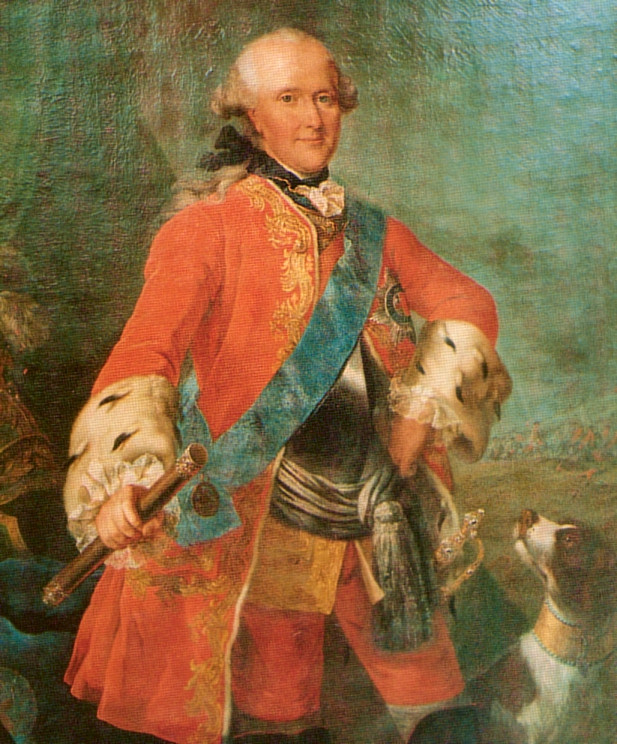
7. Ferdinand, Duke of Brunswick-Lüneburg
A) 4/5 B) 4/5 C) 3.5/5 D) 3.5/5 E) 3/5 Total: 18.5/25
Thanks to his life-long friendship with his brother-in-law, Frederick II, King of Prussia, Ferdinand was able to dialogue on military matters with not only Frederick but many of the other respected military minds of the age. If only for his winter campaign of 1758, Ferdinand deserves to be placed on this list. Taking command of a dispirited recently surrendered force, Ferdinand was able to regain the strategic initiative and place the war back in the balance. Though occasionally defeated by the French, who possessed their own excellent leader in the form of the Duc de Broglie, Ferdinand steadily pushed back larger French armies and made a name for himself. Ferdinand had a unique challenge of leading a coalition force of Hessian, Brunswick, British, Hanoverian, and Prussian forces. He is, in my opinion, the most successful leader of disparate coalition forces to date. Though he did not advance the art of war, in theory, he was a highly successful practitioner of Frederick II's search for the decisive battle. The victory at Minden, his brainchild, is one of the greatest battlefield achievements of the Kabinettskriege era.[4]
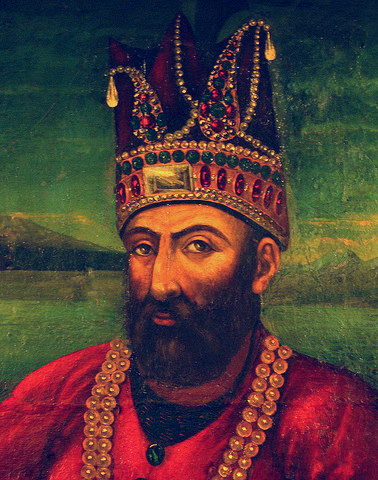
6. Nader Sah Afsar, Shah of Persia
A) 5/5 B) 1/5 C) 3.75/5 D) 4/5 E) 5/5 Total: 18.75/25
An unsung great commander of the Kabinettskriege age, Nadir Shah was truly an exceptional commander. Nadir won the vast majority of the battles which he commanded, as a result of unorthodox tactical system he employed. Starting from a local commander with a few hundred warriors, he built a army of men who employed linear tactics and firepower, rather than missile cavalry, to achieve its goals. In every way the heart of the force were Nadir's Jazareychi, who used heavy muskets weighing close to 40 pounds, and firing a 94 caliber ball, much more on the order of European wall guns. Nadir's use of firepower, mixed with cavalry on the wings of his formations allowed him to conquer an impressive empire, stretching from an Armenia to Pakistan. At the time of his death in 1747, Nadir led the largest army in the world, numbering 375,000 men. His murder by his officers led the the swift collapse of his empire, leading to a number of historians to compare him with Alexander the Great. This swift collapse accounts for his score in criteria B), his assassination by ambitious officers and brutality in later years account for C). In most other aspects, Nadir Shah was one of the most respected commanders of the age, and was admired by philosphes and military theorists throughout Europe and the world.[5]
So, with that, we have completed the next five. Do you agree with my rankings? Have I left someone out? Let me know if the comments below.
Thanks for Reading,
Alex
--------------------------------------------------------------------------------------------------------------------------
[1] There is disturbingly little to read on Turenne in English. Jean Bérenger's 1987, Turenne, remains a good biography for French speakers.
[2] Not surprisingly, Washington has generated an incredible amount of scholarly attention. I enjoy Edward Lengel's, General George Washington: A Military Life, and the relevant portions of Jon Ferling's Almost a Miracle.
[3] With a lack of biographical material in English, see Christopher Duffy's, By Force of Arms.
[4] In English, readers will find that Reginald Savory's, His Britannic Majesty's Army in Germany is old but intriguing. German readers will enjoy Mediger and Klingbiel's, Herzog Ferdinand von Braunschweig-Lüneburg und die alliierte Armee im Siebenjährigen Krieg.
[5] For military details of Nader's life, see Michael Axworthy, The Sword of Persia.


