Monday, July 11, 2016

Who Were The Greatest Commanders Between 1648-1789: Ranks 5th-1st


Dear Readers,

As you may or may not have heard, I am undertaking to rank the greatest army commanders of the Kabinettskriege age. You can find a full list of the potential candidates here.  These are the following categories upon which these generals are being judged:

A) Battle win-loss record, reckoned against total number of battles fought as commander.
B) Achievement and Sustainment of strategic/political aims
C) Charisma/inspiration of soldiers under their command
D) Scale of operations under their personal command
E) Display of originality/flexibility in thinking

This post will list the highest scoring members from the pool in the previous post, ranked from lowest (5th) to highest (1st). Without further adieu, here are the winners:


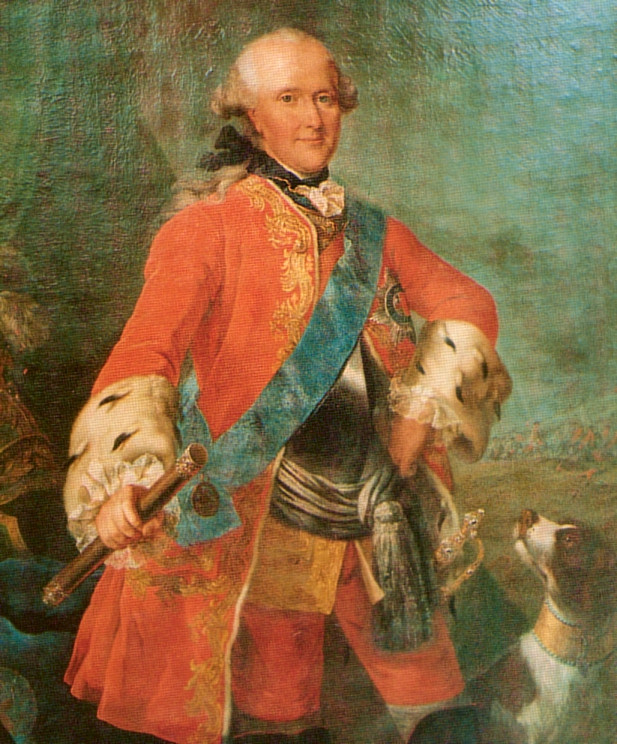
Maurice de Saxe (1696-1750).PNG


5. Maurice de Saxe, Marshal of France
A) 5/5 B) 3/5 C) 3/5 D) 4/5 E) 4/5                                                           Total: 19/25
The greatest French military mind between Turenne, Villars, and Napoleon, Maurice de Saxe showed incredible military wisdom in his repeated defeats of British and Allied forces in the War of Austrian Succession. The victor of Fontenoy, Lauffeldt, and Roucoux, A lifelong soldier, he served under Prinz Eugene of Savoy, as well as Peter I of Russia in the late stages of the Great Northern War. Maurice came to the attention of Europe when he commanded the successful surprise attack against the city of Prague in September of 1741.In addition to the successful field battles named above, de Saxe assisted in the capture of Brussels, Bergen-op-Zoom, and Maastricht. Among eighteenth century generals, de Saxe stands out for his ability to capitalize on his successes in the field with consequent gains in terms of territory and fortresses. Dying early, at the age of 54, one wonders that the outcome of the Seven Years' War in Europe might have been different if he had lived another ten years. Despite the passage of two hundred and fifty years, his memoirs remain a fascinating piece of military theory. De Saxe will forever be one of the more romantic figures of eighteenth-century warfare, his legacy untainted by the mistakes of later years.[2]    


4. Prince Eugene of Savoy
A) 4/5 B) 4/5 C) 3/5  D) 4.5/5 E) 4/5                                                         Total: 19.5/25

Prinz Eugen von Savoyen might be one of the first individuals in German Central Europe to achieve celebrity status in his own lifetime. He has an incredible song, and sat for an astounding number of portraits. Invariably, in these portraits, he is always pointing at something great that he did. On a more serious note, Prince Eugene was one of the most able soldiers of his age, successfully winning battles against the French, Ottomans, and Bavarians. He is closely associated with the Duke of Marlborough (below) and careful reader will note that Prince Eugene and Marlborough have tied in their score. Though Eugene was not always as successful as Marlborough, he had a far longer military career, facing more diverse opponents. His soldiers' laughed at his homosexuality, as camp songs from the era show, but fought well for him. He achieved notable victories at Hoechstaedt (Blenheim) in 1704 Turin in 1706, and Belgrade in 1717, although there were many others. Like many on this list, he suffers from the lack of a good modern biography in English, but those who read German can trace his campaigns though a massive multi-volume record of his correspondence which was published in late nineteenth-century.[2]


3. John Churchill, Duke of Marlborough
A) 5/5 B) 3/5 C) 3.5/5 D) 4/5 E) 4/5                                                        Total 19.5/25

Perhaps the greatest praise of Marlborough comes from another of the British "great captains," the Duke of Wellington. In 1836, he commented, "I always used to say that the presence of Napoleon at a battle was worth a reinforcement of 40,000 men. But I can conceive nothing greater than Marlborough at the head of an English army."[3]  Marlborough's achievements are manifold. Coming to prominence in the reign of James, he was able to adroitly transfer his loyalties to William and Mary during the Glorious Revolution of 1688. The greatest test of his career was the grueling War of Spanish Succession, where Marlborough was the commander-in-chief of the effort against Louis XIV's France. While Marlborough's great battlefield victories are familiar to many: Blenheim, Ramillies, Oudenarde, Malplaquet, the war was less successful in the strategic realm, Philip, Duke of Anjou, would still become King of Spain. Although the allies secured the assurance that Spain and France would not be unified into one Bourbon kingdom, the allied kingdoms of France and Spain would go on to injure England in the course of the eighteenth century, during the American War of Independence. Marlborough's repeated victories and confident planning won him the respect of his men, this is clear the letters and journals of soldiers who served with him, such as John Marshall Deane. Marlborough advanced the art of war tactically, and his predilection for firepower would do much to influence later armies of the Kabinettskriege age.[4]


Suvorov Alex V.jpg


2. Alexander Suvorov
A) 5/5 B) 3/5 C) 4/5 D) 4/5 E) 5/5                                                            Total: 21/25

Alexander Suvorov was, without question, the greatest Russian military mind to grace the eighteenth century. A sickly child, Suvorov spent his early years reading military history intensively, and at age 18, enlisted in the Semyonovsky Guard Regiment. Cutting his teeth in the campaigns against Frederick of Prussia in the Seven Years' War, Suvorov obtained a colonelcy at the age of 32, at the end of the Seven Years' War. His first independent commands saw victories over Polish rebels and the Ottoman Empire. Despite being outnumbered against the Ottomans, Suvorov led his men to victory time and again. Suvorov became famous for his initiative, which occasionally earned him censure. He led campaigns in Eastern Europe until his exile by Paul I of Russia in 1796. Suvorov, who was admired by Catherine, disagreed with Paul about military doctrine, particularly an infectious strain of Prusso-mania which had damaged the Russian fighitng ability. After three years of retirement, Suvorov returned to lead a lightening campaign in Italy in 1799. Though he never fought against Napoleon, Suvorov's victories in this campaign show that the armies of the Ancien Regime, when led by an able commander, were not impotent against the forces of Revolutionary France. Suvorov also gives modern readers a number of exceptionally pithy quotes, such as:

"What is hard in training will be easy in battle."
"Win with ability, not with numbers."
"Perish yourself, but rescue your comrade."

A great leader of men, Suvorov deserves to be considered as one of the foremost military minds in world history.[5]


1.  Frederick II Hohenzollern, "the Great"
A) 3/5 B) 4/5 C) 5/5 D) 5/5 E) 4.5/5                                                     Total: 21.5/25

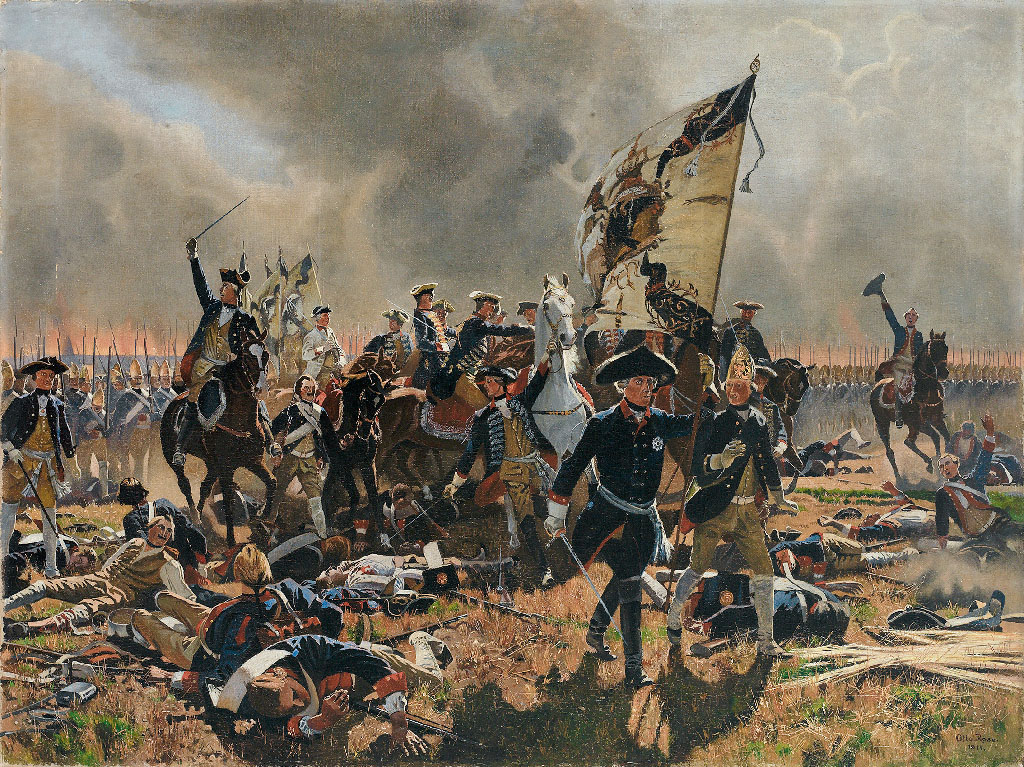
Frederick's expression above no doubt mimic's the readers surprise to find him at the top of the list. In all seriousness, it has recently become very fashionable academically, and even in popular history, to look down on Frederick the Great's achievements. I cannot say that I agree with this trend, and while Frederick certainly should not be regarded as a starry-eyed Uebermensch, who single-handedly won the wars in which he took part, he is, in my opinion, the greatest captain of the Kabinettskriege age. Now for the justification: how did I arrive at the numbers above. You will note, Frederick scores rather low in the win/loss category. He won around half the battles which he commanded in the Seven Years' War, and all of the battles in the War of Austrian Succession. With this in mind, and with his impressive total number of battles as a commander, he receives an above average, but not exceptional A) criteria score. Frederick generally achieved his goals for the Prussian state: he seized and held Silesia for the duration of his reign, and also added West Prussia to Hohenzollern domains. Thus, he scores quite well in the B) criteria. The letters of Frederick's common soldiers, althought not some of his personal aides and officers during the later Seven Years' War, show devotion which exceeds most eighteenth-century commanders. This grants Frederick a perfect score in the C) category. In terms of forces under his command, Frederick's role as Roi-Connétable allowed him to wage war on multiple fronts, leaving defensive armies in secondary theaters, and bringing his royal army to bare on whatever enemy looked the most pressing. Finally, Frederick's system of flank attacks proved highly successful in the War of Austrian Succession and early Seven Years' War. Though Frederick's enemies adapted to meet this challenge, the king recognized this adaptation, and showed that he was as adept at defensive warfare as his foes. Though not as able on the battlefield as some of his contemporaries, Frederick's system of war allowed Prussia to survive and grow in the aftermath of the Seven Years' War. This achievement places him, in my opinion, at the pinnacle of Kabinettskriege era commanders.[6]


Do you agree with these rankings?

Thanks for Reading,


Alex Burns

--------------------------------------------------------------------------------------------------------------------------

[1] To my knowledge, and I am no expert, there is no more recent biography of de Saxe in English than Jon Manchip White, Marshal of France: The Life and Times of Maurice, Comte de Saxe.
[2] The most recent biography in English is Nicholas Henderson, Prince Eugene of Savoy.
[3]Stanhope, Miscellanies, 81.
[4] See David Chandler's Marlborough as Military Commander,  and John Lynn's The Wars of Louis XIV.
[5] See: Phillip Longworth's The Art of Victory, and Christopher Duffy's, Eagles Over the Alps.  
[6] The two "must read" biographies of Frederick in English are: Duffy, Frederick the Great: A Military Life, and Tim Blanning,  Frederick the Great: King of Prussia. 

Friday, July 8, 2016

Who Were The Greatest Commanders Between 1648-1789: Ranks 10th-6th

Dear Reader,

As you may or may not have heard, I am undertaking to rank the greatest army commanders of the Kabinettskriege age. You can find a full list of the potential candidates here.  These are the following categories upon which these generals are being judged:

A) Battle win-loss record, reckoned against total number of battles fought as commander.
B) Achievement and Sustainment of strategic/political aims
C) Charisma/inspiration of soldiers under their command
D) Scale of operations under their personal command
E) Display of originality/flexibility in thinking

This post will list the highest scoring members from the pool in the previous post, ranked from lowest (10th) to highest (6th). Without further adieu, here are the winners:


Henri de la Tour d'Auvergne, Vicomte de Turenne by Circle of Philippe de Champaigne.jpg

10. Henri de La Tour d'Auvergne, Vicomte de Turenne
A) 3.75 B) 4/5 C) 3/5 D) 4/5 E) 3.25/5                                                                      Total: 18/25

Historian John Childs has described Turenne as, "arguably the greatest soldier of the seventeenth century." (Childs, Warfare in the Seventeenth Century, 225.) A general who cut his teeth in the bloody fighting of the Thirty Years' War, Turenne won battle after battle for Louis XIV in the latter half of the seventeenth century. The Dutch "rampjaar," or disaster year, of 1672, when the Dutch state nearly collapsed under external military force, was largely due to Turenne's successful military actions, He often emerged victorious against superior forces. He was largely responsible for the Louis XIV's successful rise to sole power, crushing the Parisian Fronde at the Battle of the Faubourg St Antoine. Turenne's victory over Conde at the same battle explains why Turenne. rather than Conde, made the cut. He led increasingly large armies, as Louis XIV solidified his hold on power. A warrior who was beloved of his men, Turenne was able to keep abreast of a number of developments in field and siege warfare.[1]


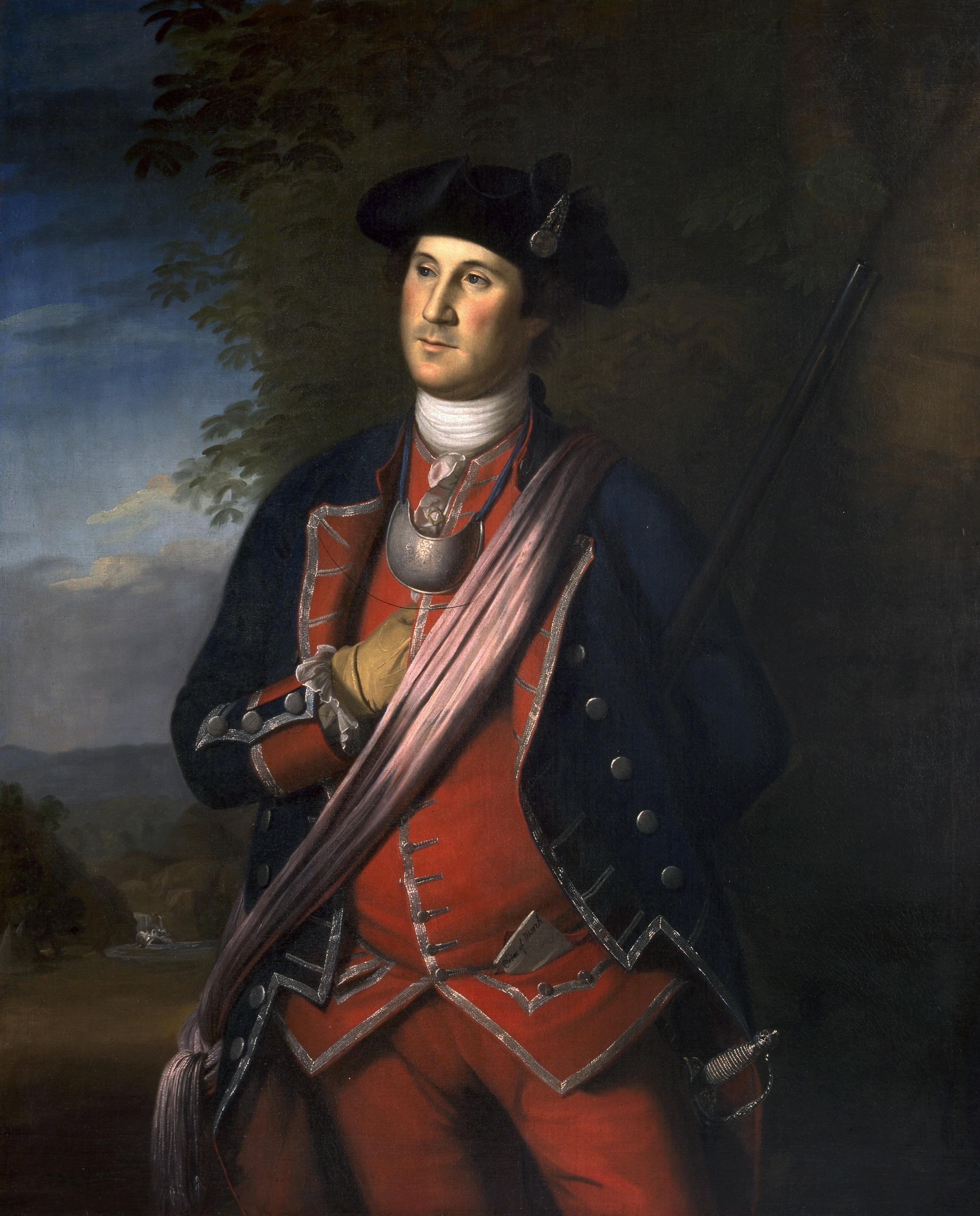
9. George Washington
A) 2.25/5 B) 5/5 C) 5/5 D) 3/5 E) 3/5                                                                    Total: 18.25/25

Never the greatest battlefield commander, George Washington nonetheless had a spectacular military career. His first independent commands met with disaster, and the capture of his entire force. However, like many of the men on this list, Washington learned from his mistakes, and went on to lead an ill-trained group of part-time soldiers through the steps of becoming a trained professional army. Did he have help? Certainly. But at the end of the day, if we blame him for the military failures of his command (Jamaica Pass,  Brandywine, Germantown, to name a few...) we should also credit him with his successes (Trenton, Princeton, Yorktown). He did defeat the military efforts of a powerful empire, earn the love and admiration of his soldiers, and go on to lead a new nation. Washington is emblematic of the results which can be achieved when an average commander is left in command long enough to gain considerable experience. That trust earns him his ranking.[2]


Image result for Leopold Joseph von Daun

8
. Leopold Joseph, Count von Daun
A) 4/5 B) 2/5 C) 3/5 D) 5/5 E) 3/5                                                                  Total: 18.35/25

Though disparaged by Frederick the Great, Leopold Joseph von Daun earned his place within the ranks of the great commanders of the Kabinettskriege era. He commanded one of the largest armies in the field during the course of the Seven Years' War, and defeated Frederick while holding army level command for the first time at Kolin in 1757. His victory at Breslau was overshadowed by the defeat of other generals at Leuthen. He and Frederick met again at Hochkirch in 1758, when Daun approved and executed Franz Lacy's plan to attack the Prussian camp in dispersed columns. This was highly successful, and Daun also captured a smaller Prussian army at Maxen the following year.  Daun's ability was placed under heavy strain in the later Seven Years' War, after he was wounded at the defeat of Torgau in 1760. Eventually, Frederick was able to maneuver and fight Austrian forces out of Silesia, leading to Daun's relatively low B) score. Despite this, Daun remained one of the few Austrian commanders who could defeat Frederick II consistently on the battlefield. [3]


Prinz Ferdinand Braunschweig.jpg

7. Ferdinand, Duke of Brunswick-Lüneburg
A) 4/5 B) 4/5 C) 3.5/5 D) 3.5/5 E) 3/5                                                         Total: 18.5/25

Thanks to his life-long friendship with his brother-in-law, Frederick II, King of Prussia, Ferdinand was able to dialogue on military matters with not only Frederick but many of the other respected military minds of the age. If only for his winter campaign of 1758, Ferdinand deserves to be placed on this list. Taking command of a dispirited recently surrendered force, Ferdinand was able to regain the strategic initiative and place the war back in the balance. Though occasionally defeated by the French, who possessed their own excellent leader in the form of the Duc de Broglie, Ferdinand steadily pushed back larger French armies and made a name for himself. Ferdinand had a unique challenge of leading a coalition force of Hessian, Brunswick, British, Hanoverian, and Prussian forces. He is, in my opinion, the most successful leader of disparate coalition forces to date. Though he did not advance the art of war, in theory, he was a highly successful practitioner of Frederick II's search for the decisive battle. The victory at Minden, his brainchild, is one of the greatest battlefield achievements of the Kabinettskriege era.[4]


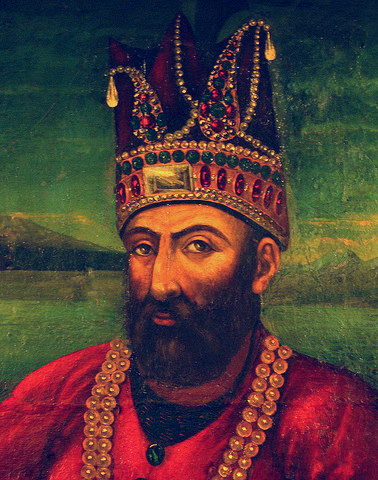
6. Nader Sah Afsar, Shah of Persia
A) 5/5 B) 1/5 C) 3.75/5 D) 4/5 E) 5/5                                                   Total: 18.75/25

An unsung great commander of the Kabinettskriege age, Nadir Shah was truly an exceptional commander. Nadir won the vast majority of the battles which he commanded, as a result of unorthodox tactical system he employed. Starting from a local commander with a few hundred warriors, he built a army of men who employed linear tactics and firepower, rather than missile cavalry, to achieve its goals. In every way the heart of the force were Nadir's Jazareychi, who used heavy muskets weighing close to 40 pounds, and firing a 94 caliber ball, much more on the order of European wall guns. Nadir's use of firepower, mixed with cavalry on the wings of his formations allowed him to conquer an impressive empire, stretching from an Armenia to Pakistan. At the time of his death in 1747, Nadir led the largest army in the world, numbering 375,000 men. His murder by his officers led the the swift collapse of his empire, leading to a number of historians to compare him with Alexander the Great. This swift collapse accounts for his score in criteria B), his assassination by ambitious officers and brutality in later years account for C). In most other aspects, Nadir Shah was one of the most respected commanders of the age, and was  admired by philosphes and military theorists throughout Europe and the world.[5]


So, with that, we have completed the next five. Do you agree with my rankings? Have I left someone out? Let me know if the comments below.

Thanks for Reading,


Alex


--------------------------------------------------------------------------------------------------------------------------
[1] There is disturbingly little to read on Turenne in English. Jean Bérenger's 1987, Turenne, remains a good biography for French speakers.
[2] Not surprisingly, Washington has generated an incredible amount of scholarly attention. I enjoy Edward Lengel's, General George Washington: A Military Life, and the relevant portions of Jon Ferling's Almost a Miracle. 
[3] With a lack of biographical material in English, see Christopher Duffy's, By Force of Arms. 
[4] In English, readers will find that Reginald Savory's, His Britannic Majesty's Army in Germany is old but intriguing. German readers will enjoy Mediger and Klingbiel's, Herzog Ferdinand von Braunschweig-Lüneburg und die alliierte Armee im Siebenjährigen Krieg. 
[5] For military details of Nader's life, see Michael Axworthy, The Sword of Persia.

Thursday, July 7, 2016

Who Were The Greatest Commanders Between 1648-1789: Ranks 15th-11th

Dear Reader,

As you may or may not have heard, I am undertaking to rank the greatest army commanders of the Kabinettskriege age. You can find a full list of the potential candidates here.  These are the following categories upon which these generals are being judged:

A) Battle win-loss record, reckoned against total number of battles fought as commander.
B) Achievement and Sustainment of strategic/political aims
C) Charisma/inspiration of soldiers under their command
D) Scale of operations under their personal command
E) Display of originality/flexibility in thinking

This post will list the highest scoring members from the pool in the previous post, ranked from lowest (15th) to highest (11th). Without further adieu, here are the winners:


15. Peter I, Tsar of Russia, "the Great"
A) 2.25/5 B) 5/5 C) 2/5 D) 4/5 E) 3.5/5                                                                    Total: 16.75


A revolutionary monarch, more than a battlefield commander, Peter I is nonetheless noteworthy, taking up the 10th spot on our list. Although he was defeated at Narva (admittedly, after he had left the battlefield) Peter defeated Karl XII at Poltava, a battlefield encounter which decisively ended chances of Swedish victory in the Great Northern War. As a military leader, he expanded his realm with great speed, giving Russia a port on both the Baltic and the Black Sea. He cared about his men, and according to a least one chronicler, his last sickness was brought on by a heroic swim to help save his soldiers on a floundering naval vessel. Despite his force of personality, many of the reforms he enacted were a result of more soldiers more experienced in the technical art of war, brought in from German-speaking lands. Despite not being tactically innovative for his time, he did overhaul the Russian way of war, bringing them into modern military practice. Peter spent nearly his entire life in uniform, from his "toy regiments," all the way to becoming commander-in-chief of a green-coated, modern, Russian army.[1]


14. Franz Moritz von Lacy
A) 3/5 B) 3/5 C) 2.5/5 D) 4/5 E) 5/5                                                                          Total: 17.5/25

Franz Moritz von Lacy, the son of Russian (Irish) general Peter von Lacy, was the consummate professional soldier of the eighteenth century. His independent commands came late in the Kabinettskriege era, commanding a force briefly in the Seven Years' War, during the successful relief of the besieged fortress of Olmütz in Moravia. He had a chance to truly prove himself during the War of Bavarian Succession in 1777, when his mastery of positional warfare brought Frederick II to a standstill. Despite not retaking Silesia for Maria Theresa int the Seven Years' War, Lacy was a highly competent soldier, and would carry out reforms which made the Austrian private soldier the equal of the Prussian in the 1770s. A quiet, and rather bookish man, Lacy was never intensely popular with his troops, but they trusted his sound judgment. A master of logistics, Lacy took to commanding the huge armies of the War of Bavarian succession with relative ease, indeed, with more ease than Frederick II. Finally, Lacy's careful planning was behind the greatest Austrian victory of the Seven Years' War, the approach by separate columns and surprise attack at Hochkirch. His attack by converging tactical columns would change the face of warfare, and be utilized by figures like George Washington. [2]


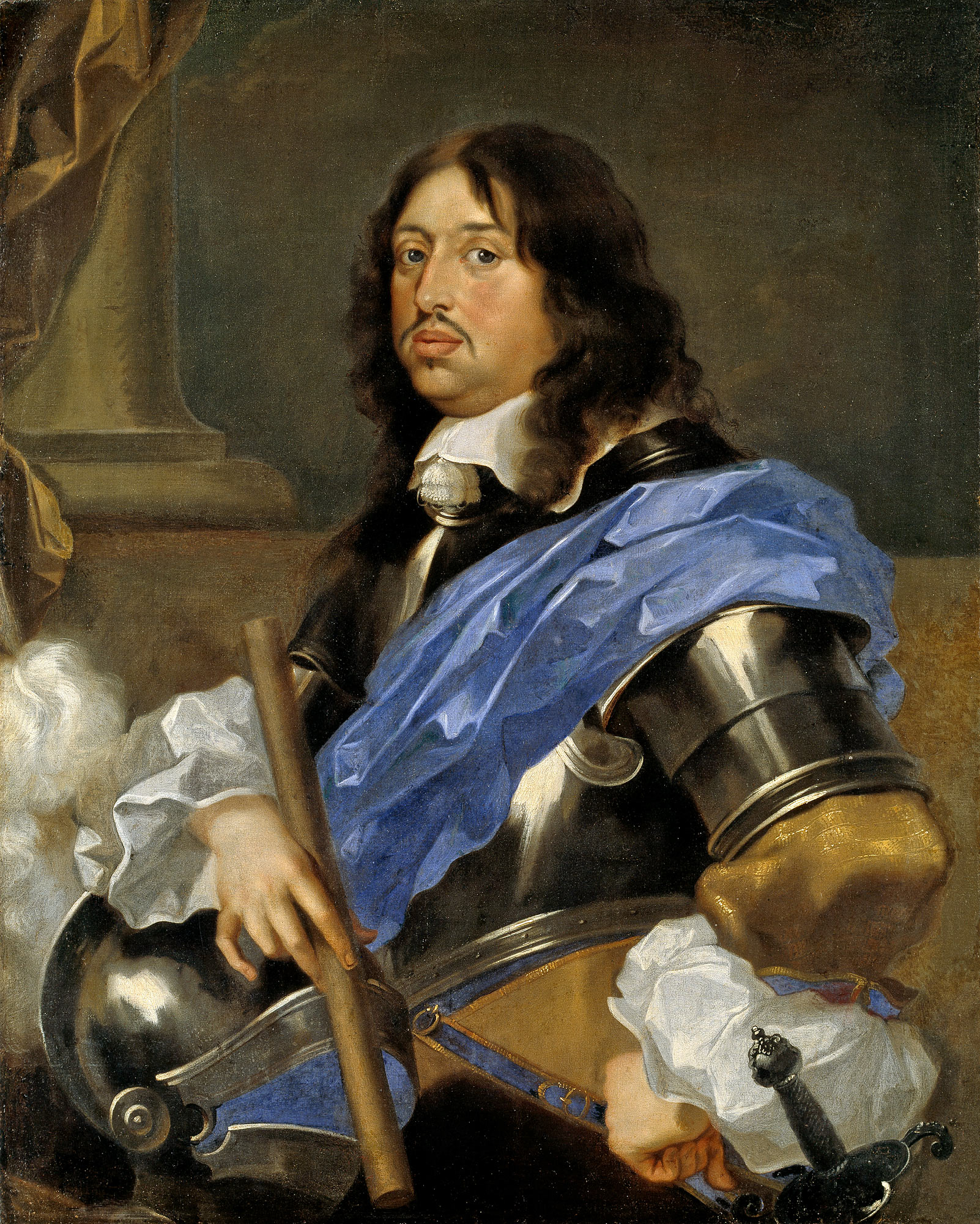
13. Karl X Gustav, King of Sweden
 A) 3/5 B) 4/5 C) 2.5/5 D) 3/5 E) 5/5                                                                       Total:17.5/25

"Who?" you hear yourself saying. A forgotten Swedish national treasure, this bad boy often gets lost in the press to flip from Gustav II Adolph right to Karl XII. He also has a pretty cool anti-tank weapon named after him. Karl X Gustav commanded Swedish armies in the 1550s, during the Second Northern War. In this conflict, he initiated a expansion of Swedish territory, including the parts of Southern Sweden which make up the modern state of Sweden today. In this conflict, he prosecuted a successful campaign against the Poles, starting a period of Polish history called "the Deluge." Though he commanded fairly small armies by later standards, he used with them great originality, most famously in his "March Across the Belts," when he led an army across the frozen Baltic Sea into Denmark, despite the terror and protest of many of his generals. The scheme went off swimmingly (errrrr, not, no soldiers drowned) and Denmark signed a peace treaty which created the modern boundaries of Sweden. He did lose the Swedish colony in Delaware though, so that's a bummer. His achievements would later be squandered by his glorious though ineffective grandson, Karl XII.[3]


12. William Howe, 5th Viscount Howe
A) 4/5 B) 2/5 C) 3.5/5 D) 3/5 E) 5/5                                                                  Total: 17.75/25

William Howe remains a controversial figure among historians, not least because he lost his dog to the Continental army. Many scholars second-guess the generals' decisions, and blame him for British failure in the revolutionary war. These criticisms may well have some merit, as his score for B) denotes. As a military commander on the battlefield, Howe achieved some notable results. From 1775-1778, the span of his military career in America, he personally commanded British troops against American rebels 10 times and was victorious on the battlefield 7 of them. This is a significant achievement. In particular, his recovery of the situation at Germantown, and his flanking movements at Brandywine and Long Island show tactical acumen. He was well beloved by his men, particularly his light infantry forces, for which he had a special affection. As commander-in-chief of British troops in North America, Howe commanded a wide array of forces and did not always coordinate them to full effect. In particular, his lack of support for General Burgoyne's army may have led to British failure in the War for Independence. On the other hand, Howe's instance that the British army operate in open order allowed British forces to perform to a very high standard in the early American War of Independence. An educated man, Howe wrote a treatise on light infantry tactics. His numerous and successful record in battle, as well as the doctrinal emphasis which allowed the British to achieve some success in the Revolutionary War, earn him his place in this ranking.[4]


11. Prinz Henri von Preussen (Prince Henry of Prussia) 
A) 3/5 B) 5/5 C) 3/5 D) 2/5 E) 4.9/5                                                                     Total: 17.9/25

Ahh, Henri. He was never going to be at the top of the list, but when Frederick II of Prussia is your older brother, sometimes it's hard to get out of the shadow. Many Prussian officers looked to Henri as a greater commander than Frederick, especially near the end of the Seven Years' War. Henri's victory at the Battle of Freiberg in October of 1762 greatly assisted the Prussian position at the negotiating table, formed part of a wider Prussian resurgence later in the Seven Years' War. Taken together, and considering his lack of command role in other battles, this explains his A) and B) score respectively. In terms of inspiration, he was a controversial figure.  Henri was more open about his sexual orientation as a gay man than his more enigmatic brother. Henri was an educated man, and encouraged young officers to learn French, "lest they be considered some sort of Germanic beast."[5] Many Prussian officers greatly admired Henri, who took over the mantle of a humane, educating force in the Prussian army after the death of FM Schwerin. In the dark days of 1761, Prussian officers hoped that Henri might offer some sort of way out of the seemingly impossible military situation. He never commanded more than a  theatre of operations, and Frederick often sent him lower quality troops, reserving the best regiments for his personal command. However, at Freiberg, Henri embraced the new Austrian method of attack in column, as demonstrated at Hochkirch. His educated and innovative mind greatly assisted the Prussian prosecution of the Seven Years' War.[6]


What do you think of the line-up so far? Do you agree that these men deserve the place they have earned in the rankings? Let me know in the comments below.

Thanks for Reading,

Alex Burns

--------------------------------------------------------------------------------------------------------------------------
[1]See Christopher Duffy's Russia's Military Way to the West, and James Cracraft's The Revolution of Peter the Great. 
[4] To this date, Lacy has no biography. See relevant portions of Christopher Duffy's By Force of Arms. 
[3] Since Karl X Gustav has no English language biography, I will recommend: Michael Robert's, The Swedish Imperial Experience, Robert I. Frost, The Northern Wars, and Paul Douglas Lockhart, Sweden in the Seventeenth Century. 
[4] See Ira Gruber's, The Howe Brothers and the American Revolution, and Andrew Jackson O'Shaughnessy's, The Men who Lost America.
[5] Duffy, Military Experience in the Age of Reason, 10.
[6] Sadly, the best biography in English remains Chester Easum's older, Prince Henry of Prussia: Brother of Frederick the Great. 

Wednesday, July 6, 2016

Valley Forge vs. the Bunzelwitz Position

The view north from Prussian positions at Bunzelwitz towards the modern
village of Czechy
Dear Reader,


In the mythos of Kabinettskriege conflict, the modern mind is drawn to aggressive action. Those alive to a sense of the past might recall Karl XII's Karoliner attacking through ice-strewn fields at Narva or Fraustadt, the daring attacks by George Washington at Trenton and Princeton, Wolfe's men scaling the heights at Quebec, or Frederick II of Prussia's masterpiece at Leuthen. Today, we are going to examine something a bit less glamorous, but no less vital to securing the reputation of these great commanders: positional warfare.

The two positions under comparison are George Washington's 1777/1778 winter encampment and defensive position near Valley Forge, and Frederick II of Prussia's defensive position in the autumn of 1761, near the fortress of Schwiednitz. We will examine the Prussian position in the Seven Years' War first, before moving to the American winter encampment.

Frederick II, King of Prussia
George Washington, (no cool royal title)


Although known for his aggressive attacks, Frederick II was also a master of defensive positional warfare. In 1761, Frederick faced disaster when two larger Austrian and Russian armies combined against him. Six years into the conflict, the Prussian army had only 54,000 men with which to face the Austrian and Russian armies combined total of some 140,000 men. Desperate to retain his position in the Prussian province of Silesia, Frederick assumed a defensive position near Schwiednitz, his vital Silesian fortress.  Frederick knew that his troops were no longer of a superior enough quality to risk open battle against such stacked odds.

Positions: Prussian (Blue) Austrian (White) and Russian (Green)

This position, which centers on the modern town of Jaworzyna Slaska (which did not exist in the eighteenth century) saw  39,000 Prussian infantry in a line some 7 miles/11.5 kilometers in distance. Frederick correctly identified the salient around Wickendorf and Jauernick (present-day Witkow and Stary Jaworow) as vulnerable part of the line. Though the Prussian position was not geographically formidable, (certainly nothing like the Zobtenberg east of Schwiednitz) Frederick was able to use heavy field fortifications combined with gently sloping ground in order to offer a truly daunting defensive perimeter.

Photos of the modern-day position capture some of the ground's tactical usefulness.

The view just West of Stary Jaworow (Jauernick) looking north towards the Prussian Nighttime HQ
Prussian defensive positions in between Stary Jaworow and Czechy (Jauernick and Tschechen)

Approach ground of planned Austrian attack in on the Position


Prussian position opposite the previous image

View towards Austrian positions near the Nonnen-Busch (forest underneath Grochotow on the map)


Prussian Positions across from the Nonnen-Busch
The Prussian position, then, did not take its strength from geographic features, but from the clear, sweeping fields of fire which the position afforded Prussian artillery. Frederick had 182 guns in and around Bunzelwitz, and he positioned most of them into redoubts which crisscrossed the ground with lanes of fire. Indeed, despite his failing health, so often cited by historians who dismiss Frederick as past his prime as a commander in the Seven Years War, Frederick spent every night at Bunzelwitz at the fortifications with his men. Hussar Captain Warnery reported that during the Bunzelwitz days,"Officers and soldiers alike had to live on bread and water. So as to set an example to the soldiers, the king made a point of staying every night in one or other of the batteries, where he had a bale of straw brought up to serve as his chair."[1]

The Austrians developed a plan for a grand attack on the Bunzelwitz encampment, but this attack stalled when Frederick destroyed Russian supply depots in Poland by means of a raid, forcing part of the Russian army to withdraw. Although Frederick was forced to abandon the Bunzelwitz position when the fortress of Schwiednitz was captured, this position bought vital time for Frederick, from August 20th to October 6th. This month and a half could have brought disaster for the Prussian army, with vastly superior forces present in theatre against a smaller Prussian army. Instead, Frederick and his soldiers survived in order to enter winter quarters late in 1761, where they would receive the news that Tsarina Elizabeth Petrovna had died. While this news did not mean an immediate end to the war, it did mean the Russians would switch sides in 1762, bringing the war back into roughly equal terms, and allowing Frederick to seize victory.

National Park Service map of the defenses at Valley Forge
I had the pleasure of visiting Valley Forge National Historical Park for the first time over the last weekend, and I was pleasantly surprised by what I saw there. George Washington utilized excellent defensive terrain in order to winter his army less than twenty miles from substantial British forces. When considering Valley Forge, generally historians gloss over  the defensive nature of the position in order to discuss issues such as the deprivation, sickness, and professionalization of the Continental Army. However, much like the Prussian position at the Bunzelwitz, Valley Forge was chosen with defense in mind. The continental army required a defensible location close enough to continue observation of the British force in Philadelphia. While a winter offensive by British General Howe might not seem likely, it was certainly a possibility, considering Washington's own actions the year before, as well as Frederick II's winter offensive in Silesia in 1757.

The outer line of defenses consisted of a number of infantry brigades occupying a ridge. The fields of fire on this ridge are truly impressive. Behind the initial line, the American position had a further set of defenses on the high ground in between the army's camp and Washington's HQ near Valley Forge. The defensive positions at Valley Forge provided a haven for the army to survive the winter, and allowed for a renewed and retooled Continental Army to prosecute the war successfully against the British in the following years.

 Here are a few photos of the defensive lines at Valley Forge.

The view from just west of the Redan near Muhlenberg's Brigade, facing southwest.
The opposite view, towards the outer line from south of Poor's Brigade, facing northeast.
The southwestern extremity of the outer line, held by Scott's Brigade

From behind the artillery park, facing southeast towards the outer defense line

Now that we have examined both of these positions, some comparison needs to be made. First of all, in my opinion, Valley Forge is much more geographically impressive than position around Bunzelwitz. This is especially apparent terms of the sweeping fields of fire the south of the outer line defenses. The high ground around the inner line at Valley Forge is higher than almost any portion of the Bunzelwitz position, perhaps excepting the Wuerbenburg behind Bunzelwitz.

 Considering the smaller numbers of troops engaged, it should not surprise us that the defenses at Valley Forge are considerably smaller than Bunzelwitz: stretching around 2 miles compared with to Bunzelwitz' 7. However- this is telling. Frederick's infantry were stretched thin at Bunzelwitz, and he had 39,000 men to defend a 7 mile frontage, or around 5,500 per mile. By that calculation, it would seem that the the roughly 7,000 (allowing for desertion and sickness) available to Washington in the early winter would have been inadequate to defend the frontage in the case of an attack. This calculation appears to have even more weight when considering the number of cannon available to both armies. At Monmouth the following year, the Americans seem to have had 16 cannon, but supposing at Valley Forge they had double that number, their position would still have been dangerously short.

Another point worth consideration is the location of the headquarters. The Prussian army manned the Bunzelwitz position in 12 hour shifts, with the night headquarters being much closer to the lines, practically in Jauernick. By contrast, the American headquarters was a mile and a half away from the outer line of defense. While certainly the possibility of attack at Bunzelwitz seemed an imminent reality in a way it did not at Valley Forge. In the advent of a British attack, would valuable time have been lost, making the trek from the headquarters to the outer line?

In the final accounting, Washington's position at Valley Forge was naturally stronger than Frederick's at Bunzelwitz. However, the weakened state of the Continental Army and the smaller number of cannon at the Continental's disposal made the position at Valley Forge tenuous. Both of these eighteenth-century commanders proved their worth, and both of these defensive positions were formidable, and continue to be imposing today.


If you enjoyed this post, or any of our other posts, please consider liking us on facebook,  or following us on twitter. Finally, we are dedicated to keeping Kabinettskriege ad-free. In order to assist with this, please consider supporting us via the donate button in the upper right-hand corner of the page. As always:

Thanks for reading,


Alex Burns


-------------------------------------------------------------------------------------------------------------
[1] Warnery, Campanges de Fredriec II, 1788, 474


Friday, July 1, 2016

Battle Comparison: Hochkirch and Germantown


Battle of Germantown, della Gatta


Dear Reader,

Today, I want to examine the similarities and differences between two Kabinettskriege era battles, the Battle of Hockirch, which occurred in Saxony on October 14th, 1758, and the Battle of Germantown, which occurred outside Philadelphia on October 4th, 1777. In the first battle, Frederick the Great and his Prussian soldiers squared off against the Austrians under FM Daun. In the second battle, British General Howe led a expert force of British soldiers against George Washington's American rebels.  Aside from the obvious similarities in the weapons systems of the combatants, and the time of the year in which they were fought, these battles contain a number of important similarities useful for students of eighteenth century warfare. A brief description of the two battles will help contextualize the analysis.

In early October, 1758, the Prussian army had recently suffered a setback in its invasion of Moravia, and failed at the siege of Olmütz. However, now that they had returned to Prussian occupied territory, they could rightly expect to return to the string of victories which had previously marked Prussian operations under Frederick. After all, in the previous year, a difficult series of defeats in the summer had been replaced by the crowning achievements of Prussian military history: the twin victories at Rossbach and Leuthen.

The Austrians, on the other hand, had fewer reasons to expect success. Although they had defeated the Prussians at the battles of Kolin and Breslau, they had been horrendously defeated by a smaller force at the Battle of Leuthen the previous year, while their victory at Breslau was a result of superior numbers.

The original Prussian positions are in light blue, note the numerous Austrian attacking columns
Noting that the Prussian position around Hochkirch was spread out, and that in the theatre of operations the Prussians had at most 40,000 men with which to defend against his 78,000, Daun decided to attack. The brainchild behind the attack was Austrian Colonel Charles Amadei, who Christopher Duffy asserts was inspired by the multiple Austrian columns used to attack at the Battle of Moys in 1757. A night march on the evening of the 13th-14th of October brought the Austrian attacking columns to within striking distance of the Prussian positions, close enough to hear music and dancing. This decision to attack in separate columns was a novel and almost untried tactic in the 1750s.

At 5am on October 14th, the Austrian attacking columns burst from cover, overwhelming shocked Prussian pickets, and moving to the attack with great speed. The Austrians had achieved complete surprise, through a mixture of false information spread to the Prussian army, and leaving their main camp attended by a few men of each company. Though the Prussians were often only half-dressed, they maintained an effective resistance in the opening stages of the battle, slowly falling back towards the village of Hochkirch.

The fighitng in Hochkirch, as imagined by 19th century artist Karl Roechling

As the Prussians were pushed back on the village, Prussian FM James Keith began feeding fresh units into the desperate fight developing in the midst of the village. Prussian infantry Regiments 13 and 18 led the way, though both were knocked back by canister fire, and FM Keith was killed. By around 8am, the Prussian position was collapsing, and Prussian infantrymen recalled firing over 120 rounds in this furious engagement.[1] Many Prussian positions were only taken after the infantry had fired away all their ammunition. Prussian sources also note the accuracy of the Austrian fire, which wounded a disproportionate number of officers.

The Prussians were driven from the field, and lost some 9,100 men out of a total of 30,000 engaged, and 104 pieces of artillery. The Austrians, by contrast, lost some 8,000 men out of around 60,000 engaged. With the events of the first battle described, let us move to the second.


The Battle of Germantown
During the opening stages of the American War of Independence, the British army soundly defeated the Americans time and again. Throughout many of the battles of 1776, with the notable exception of Trenton and Princeton, British and German forces overcame the American opposition, and seemed to be winning the war. Indeed, the British had defeated the Americans only a month before at the Battle of Brandywine.

However, George Washington's Continental army had been slowly improving, and Washington decided to risk another battlefield encounter with the British forces under General Howe. In his account to congress on October 5th, Washington indicates that Howe's decision to split his army prompted Washington to attack. The numerical advantage lay with Washington's forces, but it was not decisive: the Americans had 8,000 regulars and 3,000 militia with which to confront the 9,000 British and German troops under General Howe.

The American plan of attack called for four columns to make a night march, and then attack simultaneously at 5am. Leaving their camp around 7pm on October 3rd, the American forces were to reach their forward positions two miles from the British lines by 2am. They approached within musket-shot by 4am. Almost immediately, the American reality failed to mesh with the plan. The American columns did not reach the British pickets until 6am, and only two of the four columns made the attack. The British 2nd Battalion of light infantry moved into support the pickets, and the Americans drove them back with great difficulty. General Howe, not realizing the severity of the enemy force to his front, chided the fleeing light infantry streaming past him, until the magnitude of the American attack became apparent.

Cliveden, the house of Loyalist Justice Chew

As the American attack intensified, British Lt. Colonel Thomas Musgrave located a tactically significant structure- the stone house of Loyalist Judge Benjamin Chew.  Musgrave took initiative, placing 120 men of the 40th Regiment inside the house, which they proceed to defend. The main battle-line stabilized a third of a mile south of the Chew house. However, a number of American units remained behind to besiege the structure. Both of the commanders on the American flanks, Armstrong and Smallwood, failed to apply pressure to the British units in their sector of the battlefield.

The American advance was initially effective as a result of the large volume of fire put out by the 1st and 2nd Maryland Brigades, however, as these brigades moved into contact with more British units, the Marylanders ran out of ammunition. With no ready solution presenting itself, individual men began to move towards the rear, showing their officers empty cartridge boxes to demonstrate that it would be idiotic to stay and fight. A thick blanket of fog, smoke, and noise from the fighting back at the Chew house also served to disorient the advancing American line. The British would counterattack the American positions, relieving the defenders of the Chew house, and begina lackluster pursuit of the American army.  The action had lasted barely four hours.

The British and American forces suffered comparable numbers of killed and wounded, 673 Americans to 520 British. In addition to their killed and wounded, the Americans lost some 450 men taken prisoner.  What made the battle so costly for the Americans, as Washington admitted to Congress on October 7th, was the American loss of men.


What can be learned?


In both circumstances, the army on the attack had previously suffered a series of defeats at the hands of their adversary. Both attacking commanders saw an opportunity to strike at a smaller enemy force. Both attacking armies were less experienced than their foe, and becoming more experienced in the course of the conflict. Both attacking armies sought to use a relatively novel way of attacking in order to take their enemy by surprise along a wide frontage.

Both defending armies were taken unaware by this novel system of attack. The British and Prussians fought obstinately to buy time in order for more units to come up and attack the enemy.  Both defending armies saw subordinate commanders utilizing initiative in order to salvage the situation.

When losses are examined as a percentage of total armies involved, the Prussians suffered by far the heaviest, as around 33% of their total force engaged became casualties.  By contrast, the British suffered the least, with rough 5% of their total force becoming casualties. However, the Prussians did inflict a larger loss on their opponents than the British, with 13% of the Austrian army rendered hors d'combat, compared with 10% of the American fighting force. However, these figures fail to show the true nature of the fighting. Assuming 40% of the Prussian casualties were men captured, (sadly, Prussian losses are not broken down) the Prussian army, in terms of killed and wounded, inflicted a 32% greater loss on the Austrians than they suffered. The British, by contrast, inflicted 23% greater number of killed and wounded on the Americans.

So while the fighting at Germantown was costly to the Americans, the fighting at Hochkirch was some of the bloodiest of the eighteenth century, and left its mark on the Prussian army. It is remarkable that both of these battles played out over the course of only 4 hours.

The American rebels failed to launch an organized attack in the same manner of the Austrians. While FM Keith might have played a more decisive role on the battle if he had lived, his piecemeal counterattack wrecked two of the better infantry regiments in the Prussian army, and did nothing to stem the Austrian tide. By contrast, Lt. Colonel Musgrave saw an opportunity to effectively delay the American advance, and his quick thinking my well have saved the British army under General Howe. Both the Americans and the Prussians struggled with ammunition problems as the battle ensued. While the Prussians were able to keep their infantry supplied via ammunition wagons for the majority of the fight, the American infantry appear to have turned back when their initial ammunition load ran empty. However, for both armies, a lack of ammunition effected the overall outcome.

Attacks by disparate columns would continue to play an important role in warfare, and the generals on the defeated sides would learn from these defeats. Oddly enough, Washington does not mention Hochkirch as his inspiration for the plan at Germantown, though many his plans were the same, down to the letter. Frederick II, who mentioned Germantown in several of his letters during the American War of Independence, did not mention any similarities to between these two battles. These battles, though firmly rooted in Kabinettskriege era warfare, show similarities to later styles of army organization, and presage ideas about divisional level systems of army management.

How should wargamers emulate these battles? Is it good to have two different systems for the AWI and SYW? Could/Should one system capture both eras?


For further information, check out By Force of Arms, by Christopher Duffy, and volume two of The Philadelphia Campaign, by Thomas McGuire.


Thanks for Reading,


Alex Burns


[1] Ernst von Barsewisch, Meine Kriegs-Erliebnisse, 77.

Thursday, June 30, 2016

Bunching, Fire Control, and Command on the Pre-Twentieth-Century Battlefield

Frederick II at the Battle of Zorndorf


Dear Reader,

This post has been on my mind for a while now, and I hope you will forgive me for my long silence. I am now in the summer between my first and second years of doctoral work, and things are going quite well. One of my articles is being published in the Journal of the Seven Years War Association, so if you are interested in soldierly standards in eighteenth-century North German armies, be sure to check it out! On a related note, I want to examine the issue of bunching and fire control as it applied to eighteenth soldiers.

When I say, "bunching," I am describing the natural instinct to stand closer together in the presence of danger. I began to seriously consider the topic, when a long car-ride conversation with a friend, (and in his own way, military historian), when he expressed incredulity that a professional fighting force such as the Prussians would devolve into an undisciplined mass of men.

The breakdown of command and control on the Kabinettskriege battlefield is well documented. Charles-Joseph, Prince de Ligne, an Austrian officer and military author, recalled, "I cannot recall an action when I did not have to try to break up a multitude of such columns with blows with the flat of my sword, while my corporals were wading in with their canes." (Melanges Militares, vol. 1, 20) "So what," you say- "the Austrians are undisciplined, such things should be expected."  Noted scholars like Christopher Duffy would argue that you are wrong regarding Austrian military capabilities, especially when Ligne would have observed them in the 1770s and 1780s. Rather, this was a European-wide phenomenon.

Frederick II of Prussia's aide in the later stages of the Seven Years' War, Georg H. von Berenhorst, made similar observations regarding Prussian battlefield experience in the Seven Years' War:

"You begin by firing by platoons, and perhaps two or three times get off an ordered volley. But after that follows a general blazing away-- the usual rolling fire when everyone blasted off as soon as he had loaded, when the ranks and files became confused, when the men of first rank could no longer kneel, even if they had wanted to. The commanders, from the lowest officer to the general, could no longer get the mass to perform anything other function: they just had to wait until it finally set itself moving forwards or backwards." (Betractung über die Kriegkunst, vol. 1, 255.)

Berenhorst observations are striking. Even the disciplined Prussian army struggled with command and control. The counter-argument to this is that Berenhorst observed the Prussian army in stages of decline- by 1760, the infantry were of a lesser quality. However, this observation is striking in its similarity to other observers in different armies.

Lt. Colonel Russell, of the British Guards, observed British infantry in action at the Battle of Dettingen, in 1743. Russell wrote in a letter to his wife,

"That the Austrians also behaved well is also true... they all fired as irregular as we did; that the English infantry... were under no command by way of Hide Park firing, but that the whole three ranks made a running fire of their own accord, and at the same time with great judgement and skill, stooping all as low as they could." (Quoted in Blackmore, Destructive and Formidable, 106)

In another letter, Russel indicated, "our men and their regimental officers gained the day; not in the manner of Hyde Park discipline, but our foot almost kneeled down by whole ranks, and so fired upon'em a constant running fire." (Quoted in Blackmore, Destructive and Formidable, 106)

 Ligne, Berenhorst, and Russell all noted the difficulty in translating command and control from peacetime maneuvers to the battlefield. Some may come away thinking that the soldiers of the eighteenth century were not drilled to a high enough standard, but this is the wrong interpretation. Other, non-Kabinettskriege era armies experienced problems in this regard, even those with impeccable credentials.


Peter Connoly's imagining of the Battle of Coronea

To examine this phenomenon at a different level, let us turn to the ancient world. I am sure that many of us are familiar with Thucydides description of the "drift to the right" phenomenon in hoplite battles. According to Strassler's translation, he indicates that, "because fear makes each man do his best to shelter his unarmed side with the shield of the man next to him on the right, thinking that the closer the shields are locked together the better will he be protected."(Strassler, The Landmark Thucydidies, 343.)

But upon closer examination, that doesn't exactly bear out. The second part of that phrase is: καὶ νομίζειν τὴν πυκνότητα τῆς ξυγκλῄσεως εὐσκεπαστότατον εἶναι. (Thuc. 5.71)

Literally, the hoplites "thinking the denser their closeness is, the better protected they are." From a logical standpoint, this is describing bunching. Thucydides language indicates that this phenomenon occurs as a result of fear, and a desire for protection. Thus, even the vaunted Spartiate of the classical age struggled to deal with battlefield bunching. Thucydides shares this anecdote in the context of Spartan King Agis' attempt to minimize the effect of bunching at the Battle of Mantinea in 418.

So, it would seem that keeping soldiers under control on the battlefield was a facet of life in most pre-twentieth century armies, and as some twentieth-century observers, such as Brigadier General Marshall noted in Men against Fire, this problem remains with us today. These problems do not deal dishonor to men from earlier times- command and control had simply not evolved to a sufficient level in order to perfectly manage battle on the scale which it was being waged. Indeed, it must be noted, the highly efficient world of counter-terrorism operations conducted by special forces usually occurs on a small scale. Large armies in battle have been, and continue to be, difficult to manage, and observers should not look for perfection in the military operations.

Thanks for Reading,


Alex Burns

Sunday, March 6, 2016

Film Review: The Witch

Photo Credit: The Witch Theatrical Trailer
Dear Reader,      


Robert Egger's film The Witch, still in theaters, is a powerful and terrifying depiction of life in the American woods of New England during the 1630s. While the film does not portray historical events or claim to, it masterfully captures its setting.   Although the film is slightly outside the purview of this blog, it deserves a mention, for like 12 Years A Slave, the filmmakers worked tirelessly to capture the setting.

The film portrays a Puritan family, who must deal with the inhospitable New England landscape in isolation from the larger plantation. In this course of this journey, they encounter their own fears, as well as threats from supernatural forces. This is not a film for the faint of heart.

Particularly, Ralph Ineson's portrayal of the struggling pater familis strikes at the heart of authentic 17th century fears. Ineson's distinctive voice, but more than that, his mastery of original pronunciation makes the setting come alive. The film's postscript makes it clear that it does not intent to portray historical events, but draws on folktales in order to be true to the period. Indeed, Egger has taken much of the dialogue from period sources.

17th century Christianity is at the heart of this film in almost every way. Fears about female sexuality, interaction with native peoples, and social alienation from other Europeans also play into the film, which made the graduate student part of me quite pleased. Early modern agriculture and family life are dealt with in a believable fashion, and the film's use of Canadian old growth forest captures the look of 1600s New England

I cannot speak to the accuracy of the films material culture in comprehensive detail, however, all clothes appeared to be handsewn, and Wampanoag and European male material culture seemed to fitting the setting in my eyes.

If more directors attempted to pursue films set in the past with less amount of commitment to detail, perhaps historians would view hollywood with less disdain.

Thanks for Reading,

Alex